Floral paintings were rare before 1600, and after that the vast majority of extant works are by men. In 1670, a Dutch writer commented that floral studies were very suitable for “young daughters and ladies of standing, who have many idle hours to fill.” By the end of the 19th century similar ideas prevailed but, fortunately, many women artists prevailed and today we have their paintings—very much of the period in which they were painted—but of surpassing beauty.
Hawthorne Fine Art in New York celebrates these artists in an online exhibition and sale, Floral Revelations: Botanical Works by Women Artists 1830-1960, on view through June 18.
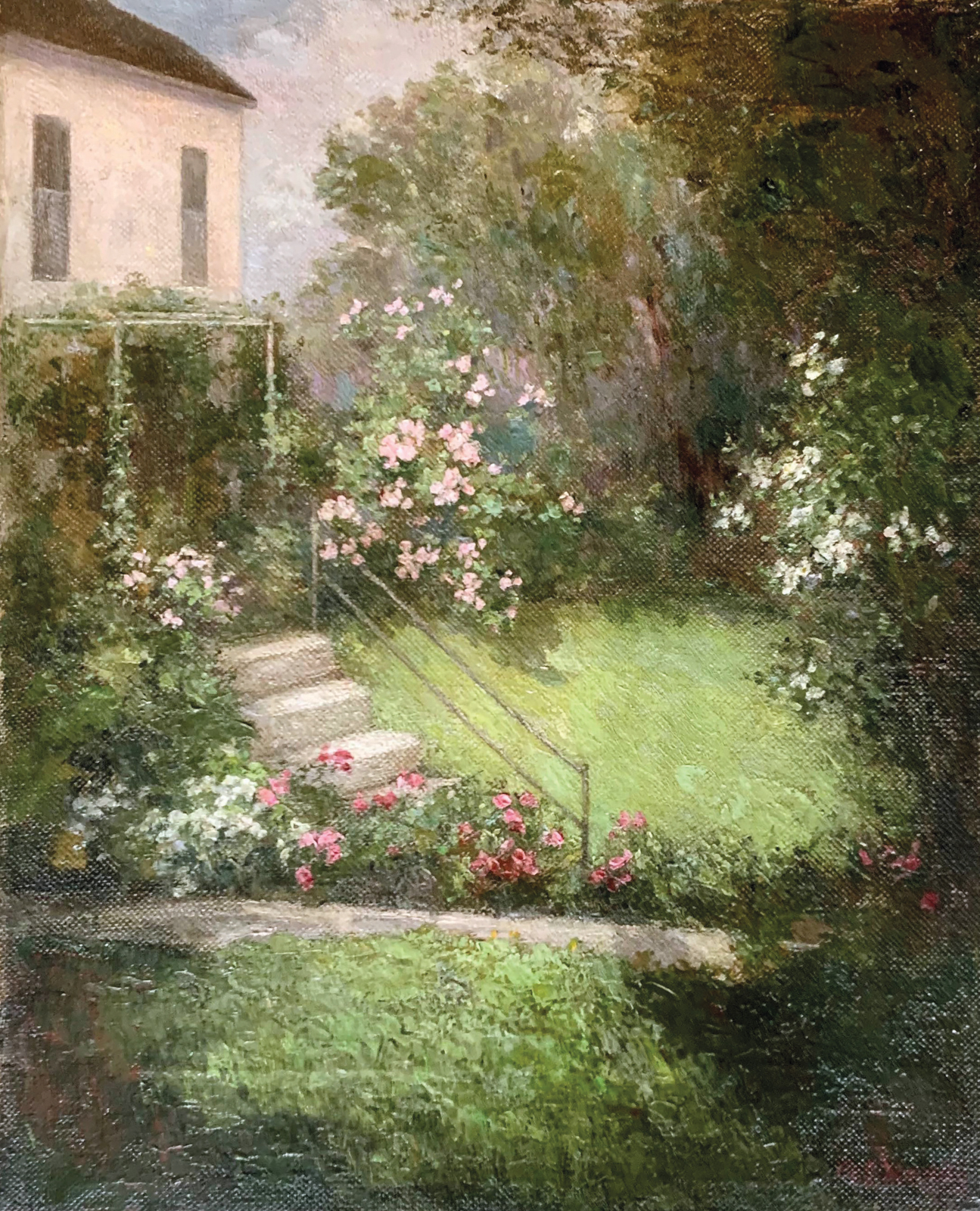
Anna E. Hardy (1839-1934), The Rose Terrace. Oil on canvas, 17½ x 14¼ in., signed lower right.
A recently conserved painting by Anna S. Fisher (1873-1942) demonstrates her ability and the reason behind her work being included in 44 annual exhibitions at the National Academy of Design. She had graduated from Pratt Institute in 1900 and taught there for 40 years.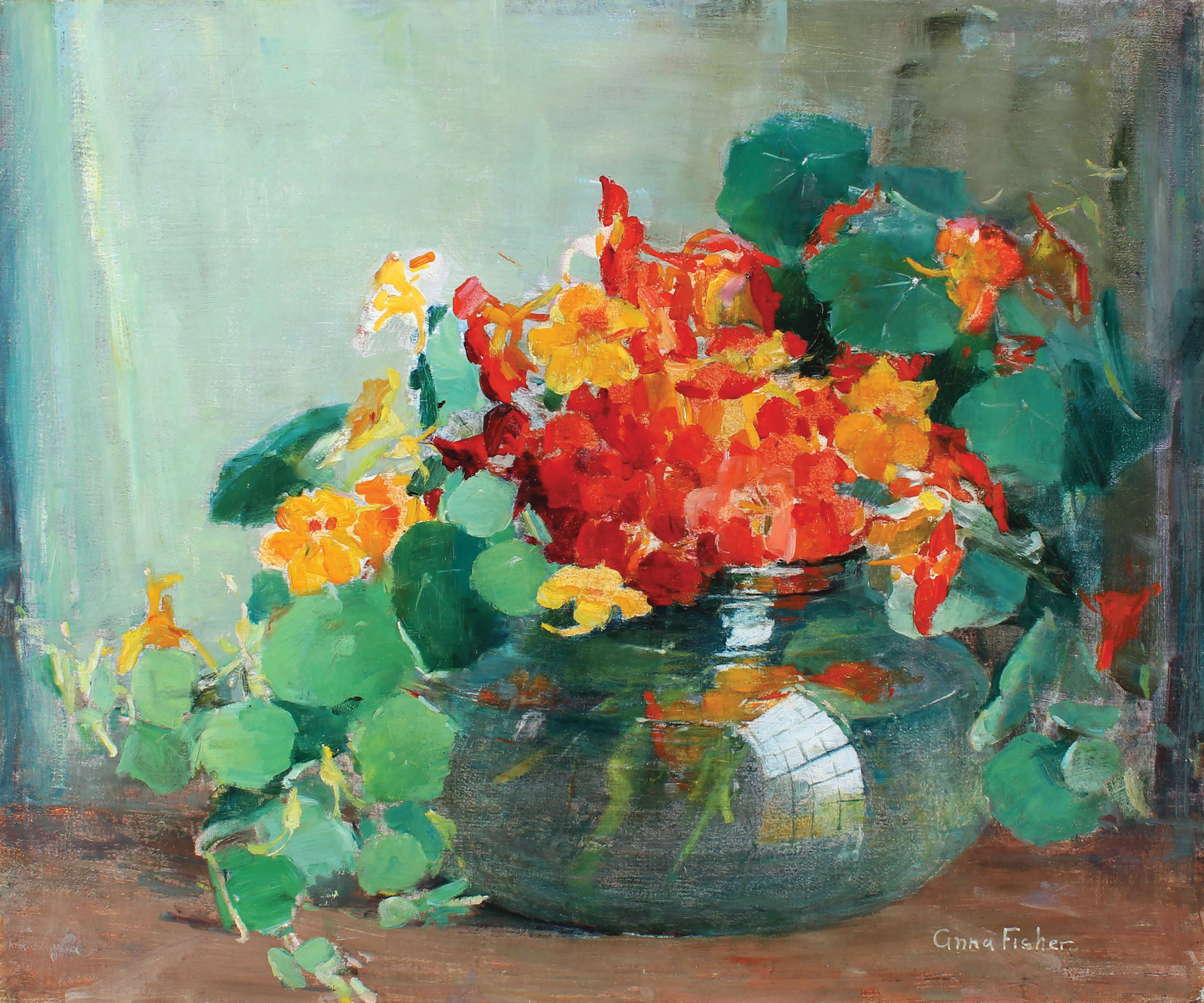
Anna S. Fisher (1873-1942), Nasturtium in a Vase. Oil on canvas, 25 x 30 in., signed lower right.
She was known for her studio oils and watercolors of floral still lifes as well as for her outdoor scenes of the city. Nasturtium in a Vase is a fine example of the former. Her studio window is reflected on the green glass vase, emphasizing its surface but not obscuring the stems, blossoms, leaves and water within it.
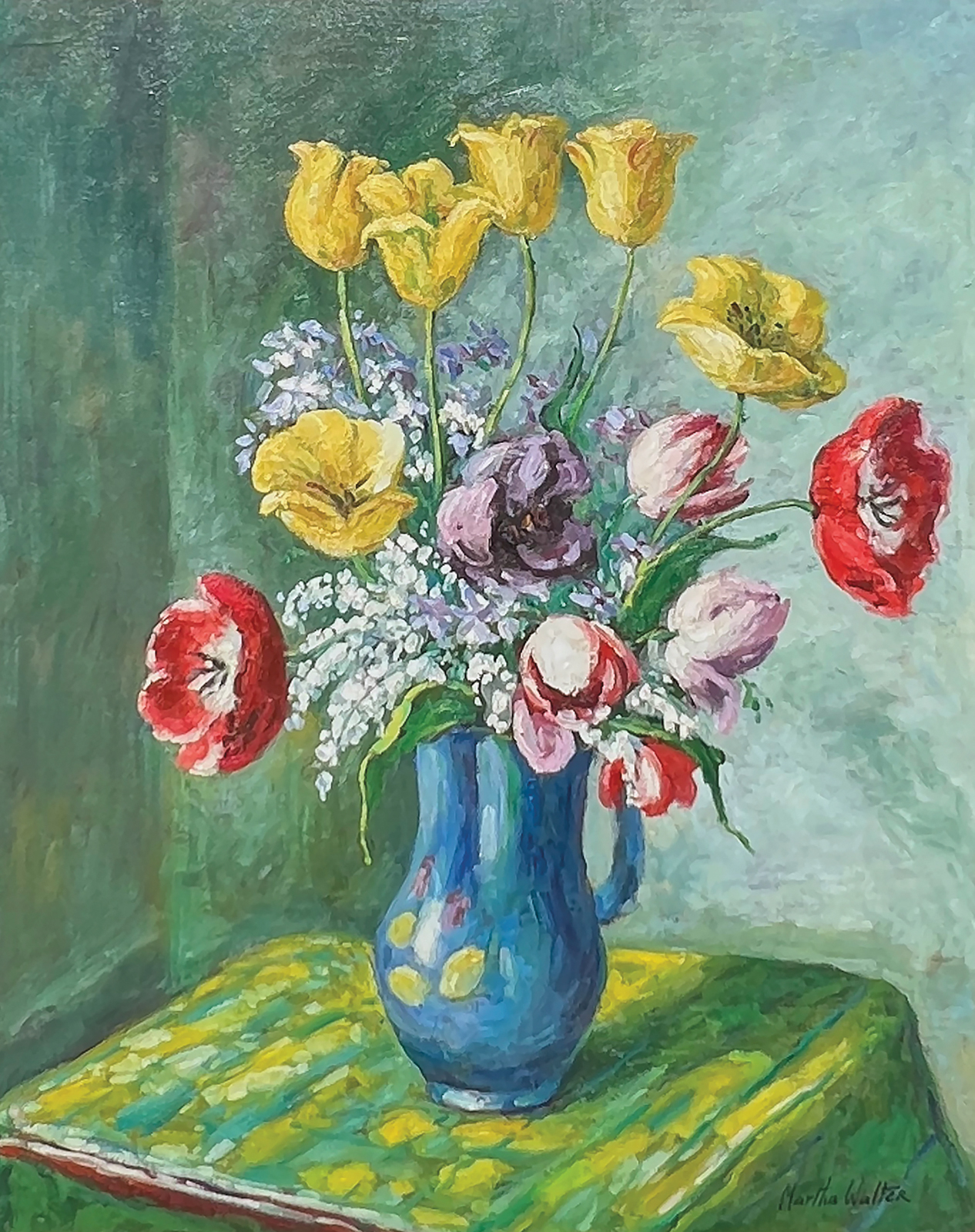
Martha Walter (1875-1976), Still Life with Tulips. Oil on canvas, 24 x 20 in., signed lower left.
Anna Eliza Hardy (1839-1934) painted The Rose Terrace outside her family home in Bangor, Maine. Her father, Jeremiah Pearson Hardy, was her first teacher and she continued to paint in his studio until his death. They both tended to the garden where she studied the blooms, increasing her botanical and artistic knowledge. She is primarily known for her still lifes which she painted for nearly 80 years. She has been described by the art historian William Gerdts as “the finest still-life specialist in Maine in the 19th century.”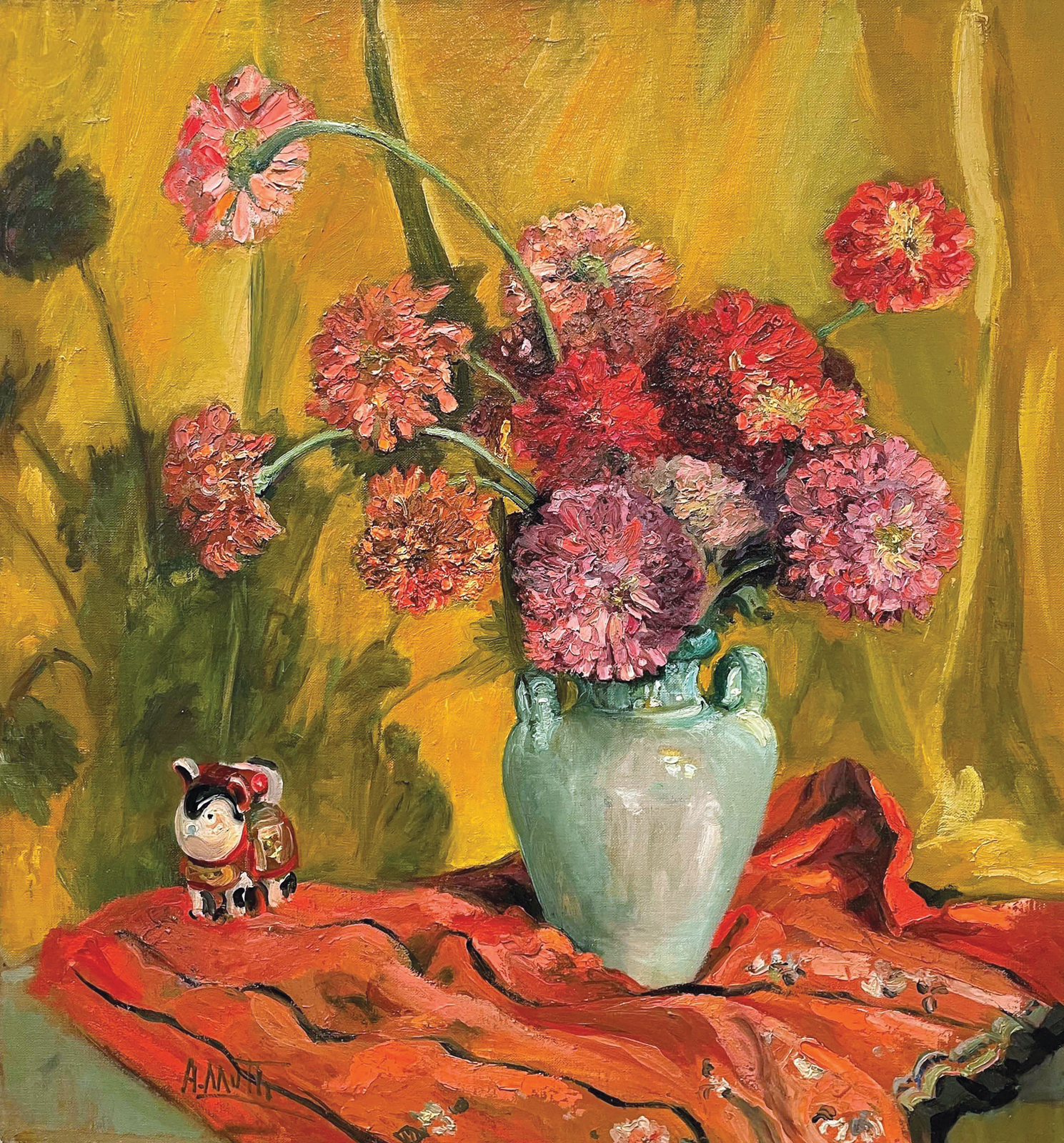
Alice Lolita Muth (1887-1952), Still-life of Oeillets and Figurine. Oil on canvas, 33⁄8 x 23⁄8 in., signed lower right.
Martha Walter (1875-1976) was a second generation American impressionist. She participated in the annual exhibitions of the Pennsylvania Academy of the Fine Arts for 50 years and received the academy’s gold medal in 1923. She also exhibited for 32 years in the annual exhibitions of the Art Institute of Chicago. She and a group of her woman friends set up a studio in Paris to learn the plein air techniques of the French impressionists.Still Life with Tulips is an example of her command of composition and of color applied with bold, spontaneous brushstrokes.
Powered by Froala Editor


